Choosing a motor is not simply a matter of matching horsepower to a machine. In 2026, manufacturers offer efficient motors, compact drives, and application-specific designs. Yet a small sizing mistake can cause overheating, slow acceleration, wasted energy, or repeated shutdowns. This guide explains how to identify the right motor size for an application using practical measurements and dependable engineering principles.
Start with the real load, not an estimated label value. Record required torque, operating speed, starting conditions, duty cycle, voltage, and ambient temperature. A conveyor carrying wet boxes may need high starting torque, while a fan usually follows a different load curve. Check the manufacturer’s torque-speed charts, efficiency data, service factor, and recommended protection. IEC and NEMA information can support the selection, but the actual machine conditions still matter. Local electrical requirements should also be confirmed by a qualified professional.
Numbers matter.
A motor that runs well for five minutes may fail after six hours in a hot enclosure. In practice, belt tension, bearing wear, frequent starts, and altitude can change the result. Oversizing is not automatically safer; it can reduce efficiency, increase inrush current, and create poor control at low loads. Undersizing is equally risky. This guide presents a careful process for comparing calculated demand with real operating behavior. It also recognizes an uncomfortable truth: field data is sometimes incomplete, and a clean spreadsheet can still produce a wrong answer. Recheck assumptions before purchasing, and request supplier validation when the application is critical.
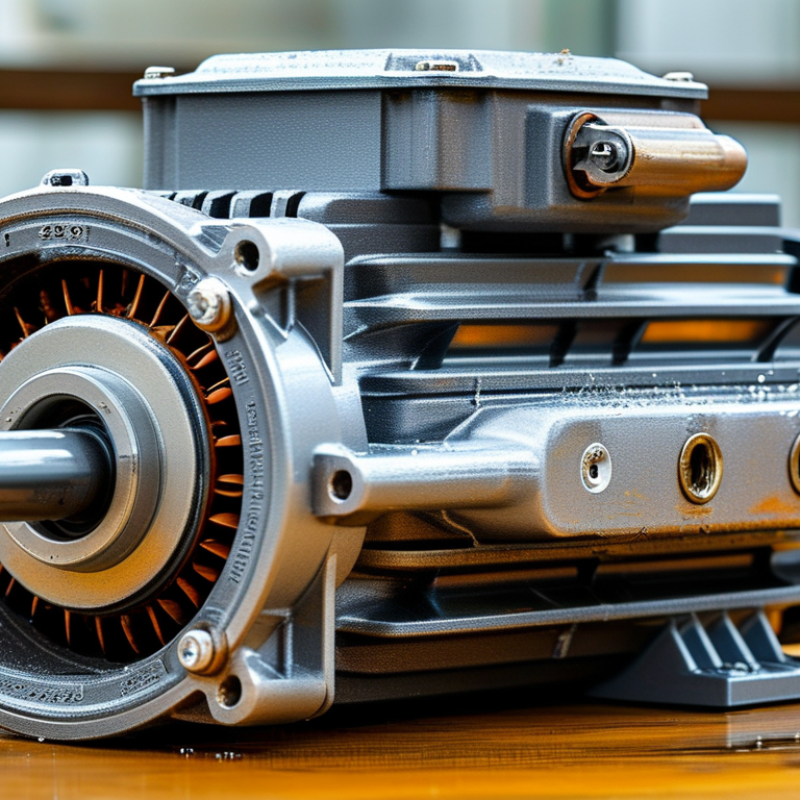
2026 Best Motor Size Guide: How to Identify the Right One?
Choosing a motor starts with the application, not the motor label. Power describes how much work the motor can deliver. Torque describes its twisting force at the shaft. Speed determines how quickly that work happens. A conveyor carrying a heavy box may need high starting torque, even when its running speed remains low. In contrast, a fan usually needs steady speed and modest torque. Remember the relationship: power equals torque multiplied by angular speed. Electrical input is not the same as useful mechanical output.
Tips: Measure the real load whenever possible. Record starting, running, and peak torque. Check the required speed, duty cycle, ambient temperature, mounting position, and available voltage. Leave a practical margin, but avoid excessive oversizing. A motor that is too large may waste energy, operate poorly, or increase equipment costs.
I have seen sizing decisions fail because engineers considered only horsepower. The machine worked, but its starts were harsh and its bearings wore early. That experience makes load behavior important. Review acceleration time and repeated starts. Consider gear reduction when speed and torque requirements conflict. A short test with a torque sensor can reveal more than a guessed specification. Calculations are useful, but field measurements may expose assumptions that looked reasonable on paper.
Choosing the right motor starts with the equipment, not the catalog. Record the machine’s required voltage, phase, frequency, and available power supply. Then measure the load’s speed and torque at startup and during normal operation. A motor that runs well without load may stall under pressure. Check the actual demand.
Motor power is important, but it is not the only deciding specification. Compare rated horsepower or kilowatts with continuous torque requirements. Review full-load current, efficiency, service factor, and duty cycle. A motor used for short bursts needs different protection from one running eight hours daily. Speed matters too. Match the motor’s revolutions per minute with the driven component, or plan for suitable speed control.
Physical details can cause expensive mistakes. Confirm the frame size, mounting holes, shaft diameter, shaft length, and keyway dimensions. Measure the available space with the guard installed. Check the enclosure rating for dust, moisture, heat, and washdown conditions. In humid areas, basic protection may be insufficient. Verify compatibility with the control system, especially when variable-speed operation is required.
Technicians should also inspect starting conditions and voltage drop in long cables. I have seen correctly sized motors underperform because installation details were ignored. It is easy to trust a familiar rating. That can be risky. Record measurements, compare them with the equipment manual, and ask a qualified professional to review uncertain values before ordering. Even a small mismatch can create noise, overheating, vibration, or early bearing wear. Measure twice. A rushed selection often costs more than the motor itself.
Motor size should be selected from the load, not from a catalog image. Measure starting torque, running torque, speed, and acceleration time. A conveyor carrying wet material may need far more starting power than its steady load suggests. Record current and shaft behavior during the heaviest operating cycle. Watch for voltage drop, unusual heat, and slow acceleration.
Duty cycle changes the answer. A motor running continuously can deliver rated output steadily, while repeated starts demand thermal capacity and overload strength. Intermittent equipment also needs enough cooling during pauses. Short cycles matter. Compare the real on/off pattern with the motor’s duty rating, then allow a modest service margin. Oversizing is not automatically safer. It may reduce efficiency, weaken low-load control, and increase operating costs.
The environment also affects usable motor output. High temperature, dust, moisture, altitude, and restricted airflow can reduce performance. Check enclosure protection, insulation class, bearings, and cooling method against the installation site. A motor that performs well in a clean workshop may struggle beside a hot furnace. My measurements are not always perfect when loads vary by season. Recheck them after installation. A small data logger can reveal peaks that one nameplate reading misses.
Example motor selections based on estimated shaft load, duty cycle, ambient temperature, altitude, and starting conditions.
The recommended motor rating should exceed the calculated continuous shaft load while remaining within the motor’s duty and thermal limits. Intermittent or high-starting-torque applications may require additional capacity, while high ambient temperature and altitude can reduce available output. Final selection should be verified against the actual torque-speed curve, service factor, overload requirements, and applicable electrical standards.
Choosing a motor starts with the load, not the catalog rating. Record torque, speed, duty cycle, starting load, and shaft alignment. A conveyor carrying wet boxes needs different behavior from a fan running steadily. The U.S. Department of Energy reports that motor-driven equipment uses more than half of industrial electricity. Small sizing errors can therefore create measurable operating costs.
Induction motors remain practical for pumps, fans, and conveyors. Permanent-magnet motors often deliver higher efficiency and stronger low-speed control. Synchronous-reluctance designs can reduce rotor losses, but their drive compatibility needs checking.
Compare efficiency under the actual load, not only the nameplate rating. IEC 60034-30-1 defines IE efficiency classes, including IE3 and IE4. Higher efficiency is not automatically better if the motor runs far below its rated load.
Mounting also affects reliability. B3 foot mounting suits a baseplate, while B5 flange mounting fits direct equipment connections. B35 combines both options. Check frame size, shaft diameter, flange dimensions, enclosure rating, and cooling method before ordering. The IEA has repeatedly identified motor systems as consuming roughly half of global electricity, making these details financially important. I have seen installations fail because the frame matched, but the shaft extension did not. That mistake is easy to prevent. Always verify the full mechanical drawing and measured load profile.
Choosing a motor in 2026 means checking the whole installation, not just horsepower. The U.S. Department of Energy reports that motor-driven equipment uses about 70% of industrial electricity. A small sizing error can therefore increase operating costs for years. Match voltage, phase, frequency, speed, torque, duty cycle, and shaft dimensions. Check the driven load at startup, not only during normal running. Too much starting torque may damage couplings or overload the supply.
Compatibility also includes the control system. Confirm that the starter or drive supports the motor’s current, insulation class, and operating range. IEC 60034-1 defines important motor ratings, including duty and temperature-rise limits. Nameplate current is essential. Guessing from frame size is risky. I have seen otherwise suitable motors fail because the enclosure did not tolerate dust, moisture, or washdown conditions. That detail is easy to miss.
Installation limits can decide the final choice. Measure the mounting space, cable route, ventilation clearance, foundation strength, and lifting access. NFPA 70 requires appropriate overcurrent protection, grounding, disconnecting means, and wiring methods for motor circuits. These requirements affect both safety and available motor size. Review ambient temperature and altitude too; reduced cooling can require derating. The DOE motor-system sourcebook also recommends verifying load data before replacement. Field measurements are better than memory, although even short-term readings can mislead. Record voltage imbalance, startup current, and real operating load before ordering.
| Typical Motor Size | Approximate Output Power | Typical 400 V, Three-Phase Full-Load Current | Common IEC Frame Range | Suitable Applications | Key Compatibility Checks | Safety Requirements | Installation Limits and Recommendations |
|---|---|---|---|---|---|---|---|
| Micro / Small | 0.12–0.75 kW 0.16–1.0 hp |
Approximately 0.4–1.9 A | 56–80 | Small fans, pumps, conveyors, mixers, actuators, and light machinery. | Confirm the supply voltage, frequency, phase configuration, mounting position, shaft diameter, keyway, rotation direction, and starting method. | Use branch-circuit protection, a correctly rated overload relay, protective earthing, and an enclosure suitable for the environment. | Avoid undersized cables and excessive voltage drop. Allow unobstructed airflow around the cooling openings and prevent operation in standing water unless the enclosure is specifically designed for it. |
| Small | 1.1–3 kW 1.5–4 hp |
Approximately 2.5–6.2 A | 80–100 | Small compressors, machine tools, ventilation systems, pumps, and compact conveyors. | Match the motor's rated voltage and frequency with the supply. Check the driven equipment's speed, torque, coupling, shaft dimensions, base-hole pattern, and service factor requirements. | Provide short-circuit protection and motor overload protection. A disconnecting means should be accessible, clearly identified, and suitable for the installation. | Check starting current before selecting a contactor, soft starter, or variable frequency drive. Keep cable routes protected from heat, vibration, and mechanical damage. |
| Medium | 4–11 kW 5.5–15 hp |
Approximately 8–21 A | 100–132 | Industrial pumps, fans, compressors, processing equipment, and medium conveyors. | Verify full-load current, rated speed, torque curve, duty rating, enclosure rating, mounting arrangement, brake requirements, and compatibility with the starter or drive. | Use correctly coordinated protective devices, an overload setting based on the nameplate current, an effective earth conductor, and guarding for rotating parts. | Consider reduced-voltage starting where inrush current may disturb the supply. Provide enough clearance for terminal-box access, inspection, bearing service, and cooling-air circulation. |
| Large | 15–30 kW 20–40 hp |
Approximately 28–55 A | 132–180 | Heavy conveyors, large pumps, compressors, fans, crushers, and production machinery. | Confirm available fault current, cable capacity, protective-device coordination, starting torque, acceleration time, shaft loading, bearing arrangement, and foundation strength. | Installation should include lockout and isolation provisions, verified protective earthing, overload and short-circuit protection, and protection against unexpected restart. | Check lifting points and equipment weight before installation. Control vibration, align the coupling accurately, and keep the motor within its permitted ambient temperature and altitude limits. |
| Heavy-Duty | 37–75 kW 50–100 hp |
Approximately 68–135 A | 180–250 | Large process lines, high-capacity pumps, compressors, fans, mills, and material-handling systems. | Check the power-system capacity, transformer and feeder rating, motor starting method, drive compatibility, harmonics, mechanical torque demand, and mounting rigidity. | Use engineered protection settings, properly rated switching equipment, thermal monitoring where required, emergency isolation, and documented commissioning tests. | Provide adequate ventilation and service access. Use suitable lifting equipment, verify foundation bolts and alignment, and observe the manufacturer's limits for vibration, starts per hour, and operating temperature. |
| Extra-Heavy / High-Power | 90–250 kW 120–335 hp |
Approximately 160–450 A | 250–355 or larger | Large industrial pumps, fans, compressors, extruders, conveyors, and continuous-process equipment. | A complete system review is required, including voltage level, short-circuit rating, harmonics, starting or acceleration method, torque-speed requirements, shaft loading, foundation design, and cooling arrangement. | Use a qualified electrical design and commissioning process. Verify protection coordination, earthing and bonding, arc-flash requirements, isolation procedures, emergency stops, and personnel access controls. | Do not select solely by horsepower. Confirm the available installation space, transport route, lifting capacity, foundation loading, cooling-air path, maintenance clearance, and allowable number of starts or reversals. |
| Selection notes: Current values are approximate three-phase estimates for 400 V operation and can vary with efficiency, power factor, motor design, load, and operating temperature. Always use the motor nameplate and installation standards for final cable, protection, starter, and enclosure selection. Check voltage, frequency, phase, rated speed, torque, frame size, shaft dimensions, mounting type, enclosure rating, duty, ambient temperature, altitude, and variable-speed-drive compatibility before purchase or installation. | |||||||
: Record voltage, phase, frequency, speed, torque, duty cycle, and available power. Measure the actual load. Do not rely only on catalog ratings.
A motor may run smoothly without load but stall when equipment starts. Check startup torque, current, and acceleration time. Normal running data is not enough.
No. Oversized motors may operate inefficiently under light loads. Compare power with continuous torque, load profile, and running hours. Bigger is not automatically safer.
Induction motors often suit pumps, fans, and conveyors. Permanent-magnet motors can provide efficient low-speed control. Synchronous-reluctance motors require compatible control equipment. The application decides.
Compare efficiency at the equipment’s actual load, not only the nameplate value. Higher efficiency may disappoint when the motor runs far below rating. Real measurements matter.
Check frame size, mounting holes, shaft diameter, shaft length, and keyway dimensions. Measure space with guards installed. A matching frame can still have the wrong shaft extension.
Dust, moisture, heat, and washdown exposure affect the required enclosure protection. Also check ventilation clearance, ambient temperature, and altitude. Basic protection may fail in humid areas.
Confirm voltage, current, insulation class, speed range, and control compatibility. Inspect long-cable voltage drop and starting conditions. Do not guess from frame size.
Check foundation strength, cable routing, grounding, disconnecting, ventilation, and lifting access. Record voltage imbalance and startup current. Short measurements can mislead, so review uncertain results carefully.
Choosing the correct motor size begins with understanding how power, torque, speed, and application requirements work together. The right selection must provide enough starting and running torque without creating unnecessary energy consumption or mechanical stress. To determine how to identify the right motor size for an application, evaluate the equipment’s load profile, duty cycle, operating hours, acceleration needs, and environmental conditions. Key specifications such as rated power, voltage, current, speed, torque, efficiency, and service factor should be compared with the actual demands of the machine.
Motor type, efficiency rating, enclosure, cooling method, and mounting arrangement also affect performance and installation. Before making a final decision, confirm that the motor is compatible with the drive system, available power supply, shaft dimensions, mounting space, controls, and safety requirements. Allowing for reasonable starting loads and operating variations can improve reliability, while avoiding significant oversizing helps control cost, reduce wasted energy, and maintain efficient operation.

RedCat Motors