Motor systems quietly determine how much energy, time, and production capacity a business can use. In 2026, upgrades are moving beyond simple motor replacement. Companies are examining variable frequency drives, high-efficiency motors, smart sensors, predictive maintenance, and integrated control platforms. These technologies can reduce wasted energy and reveal early signs of bearing wear, overheating, or misalignment.
Yet every facility has different operating conditions. A food plant may need washdown-ready equipment, while a warehouse may prioritize conveyor uptime. Pumping systems, compressors, fans, and machine tools also respond differently to speed control. The key question is not only what technology is available, but what should businesses know before upgrading motor systems. Load profiles, starting requirements, duty cycles, power quality, and maintenance skills should be reviewed before purchasing equipment.
Small details matter. A motor running below its efficient range can weaken expected savings. An incorrectly sized drive may create heat, noise, or nuisance trips. Installation can also expose hidden issues in wiring, ventilation, or control logic. Real measurements are more useful than assumptions. Businesses should record current, voltage, operating hours, fault history, and production demands before choosing an upgrade.
There is no perfect package.
A practical plan compares total cost, downtime risk, energy performance, safety needs, and future expansion. Qualified engineers, experienced technicians, and reputable manufacturers can help validate these decisions. Still, projections deserve careful testing. Pilot installations, commissioning checks, and follow-up monitoring often reveal problems that sales documents miss. The best 2026 motor system upgrade is therefore not the most advanced option, but the one that performs reliably within the business’s actual environment.
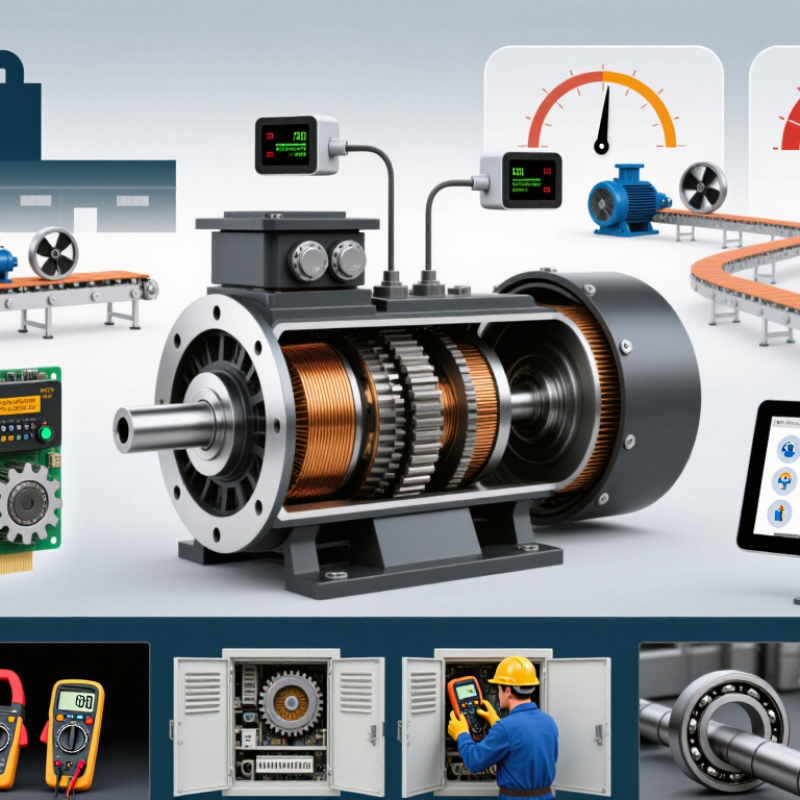
In 2026, motor system upgrades will mean more than replacing an old motor. Businesses will assess the motor, drive, pump, fan, controls, and operating schedule together. The International Energy Agency reports that electric motor systems consume roughly 45% of global electricity. In industrial facilities, they can represent nearly 70% of electricity use. The savings opportunity is substantial.
A practical upgrade may include a high-efficiency motor, variable-speed control, accurate sensors, and power-quality monitoring. These changes can reduce throttling losses and improve production stability. The U.S. Department of Energy notes that properly sized motor systems can deliver significant energy savings, especially when equipment operates under changing loads. Measure before buying. A larger motor is not automatically better.
Maintenance teams should also inspect alignment, lubrication, vibration, and heat. The U.S. Department of Energy identifies poor maintenance and oversized motors as common sources of avoidable loss. Digital monitoring can reveal rising temperature or abnormal current before a costly shutdown. However, data systems require training, secure access, and regular review. That part is often underestimated. A 2026 upgrade plan should include installation costs, downtime, payback, spare parts, and employee skills. Industry reports often emphasize efficiency, but real projects can disappoint when baseline measurements are weak or production patterns change.
Motor systems now deserve a complete review, not a simple motor replacement. The International Energy Agency estimates that electric motor systems consume about 53% of global electricity. In industrial facilities, the U.S. Department of Energy reports that motor-driven equipment can use nearly 70% of site electricity. These figures make efficiency a financial decision, not merely an engineering preference.
High-efficiency motors, variable-speed drives, and intelligent controllers are shaping current upgrades. Variable-speed control can reduce throttling losses in pumps and fans. Small speed changes matter. Connected sensors also track vibration, temperature, current, and bearing wear. According to the U.S. Department of Energy’s Superior Energy Performance guidance, measured energy performance supports stronger maintenance and investment decisions. However, sensors cannot repair poor commissioning or incorrect load selection.
Digital twins and edge analytics can compare real operating data with expected performance. This helps teams detect declining efficiency before production suffers. Power-quality monitoring is equally important, especially where harmonics affect drives and sensitive equipment. Field audits often reveal oversized motors running below suitable loads. That problem remains easy to miss. A perfect retrofit rarely exists; production schedules, ventilation, maintenance skills, and electrical capacity must shape the final design. Businesses should verify savings through baseline measurements, post-installation testing, and documented operating conditions. Without that discipline, attractive projections may remain only projections.
Assessing motor system upgrade requirements starts with evidence, not equipment age. Record motor ratings, operating hours, load profiles, starts per hour, and maintenance history. Measure current, voltage, power factor, vibration, and temperature during real production shifts. A nameplate rarely shows the whole story.
The U.S. Department of Energy reports that motor-driven equipment can consume more than two-thirds of industrial electricity. The International Energy Agency estimates electric motor systems use roughly half of global electricity. These figures justify investigation, but they do not prove every replacement will save money. Compare measured demand with actual production output. Include controls, pumps, fans, gearboxes, and compressed-air loads. The first estimate is often wrong. A short measurement campaign may reveal oversizing, throttling losses, or frequent idle running.
Tips: Build a baseline for at least one representative week. Separate operating savings from maintenance savings. Test variable-speed control only where load demand changes. Check harmonics, cooling, enclosure ratings, and restart behavior before approval. Use lifecycle cost, not purchase price, and request assumptions in writing. Review findings against the DOE Motor System Assessment Tool and relevant energy-management procedures. Leave room for doubt: a highly efficient motor can still waste energy in a poorly matched system.
| Assessment Area | Key Data to Collect | Practical Upgrade Trigger | Recommended 2026 Upgrade Option | Expected Business Impact | Priority |
|---|---|---|---|---|---|
| Motor age and condition | Installation year, repair history, insulation condition, bearing condition, operating temperature, vibration readings | Repeated failures, rising vibration or temperature, major rewind requirement, or obsolete spare parts | Replace with a properly sized high-efficiency motor when repair cost and downtime risk are significant | Improved reliability, lower maintenance exposure, reduced unplanned downtime | High |
| Efficiency level | Rated output, measured input power, annual operating hours, load factor, existing motor efficiency class | The motor operates for long hours and has a lower efficiency class than currently available alternatives | Evaluate a motor meeting the applicable IEC 60034-30-1 efficiency class and verify the actual duty point | Lower electricity consumption and reduced operating cost over the motor life | High |
| Motor sizing | Actual shaft load, starting torque, peak load, duty cycle, acceleration time, service factor and process changes | Measured load is consistently far below rating, or overload trips occur during normal production | Resize the motor based on measured load and the required starting and overload characteristics | Better efficiency at the operating point, fewer trips and improved process stability | High |
| Variable-load applications | Flow, pressure, speed, production rate, daily load profile and control-valve or damper position | Fans or pumps frequently run below full flow while throttling valves or dampers remain partially closed | Assess a variable-frequency drive with automatic speed control and minimum-speed protection | Potentially substantial energy reduction in centrifugal fan and pump systems; savings depend on the load profile | High |
| Speed control and process requirements | Required speed range, torque profile, acceleration and deceleration limits, bypass needs and control-system compatibility | The process requires frequent speed adjustment or direct control of flow, pressure or conveyor speed | Install a correctly rated drive, motor-compatible output filter where required, and closed-loop controls when necessary | Process control improvement, smoother starting, lower mechanical stress and possible energy savings | High |
| Power quality | Voltage, current, frequency, voltage unbalance, power factor, harmonics and transient events | Voltage unbalance approaches or exceeds 1%, nuisance trips occur, or harmonic distortion affects equipment operation | Correct phase imbalance, improve connections, and assess line reactors, passive filters or active harmonic mitigation | Lower overheating risk, improved motor life and more stable operation | High |
| Starting method | Starting current, voltage dip, start frequency, mechanical shock, available short-circuit capacity | Direct-on-line starting causes voltage dips, high mechanical stress or repeated starting failures | Evaluate a soft starter or variable-frequency drive, provided the motor and process are compatible | Reduced starting stress, improved network stability and fewer production interruptions | Medium |
| Mechanical transmission | Coupling or belt condition, alignment, gearbox ratio, lubrication, torque losses and driven-equipment efficiency | High vibration, belt slip, coupling wear, alignment problems or excessive transmission losses are detected | Align shafts, optimize belts or couplings, improve lubrication and assess direct-drive alternatives | Reduced losses, longer bearing life and improved equipment availability | Medium |
| Operating environment | Ambient temperature, dust, moisture, washdown exposure, hazardous-area classification and enclosure requirements | Ingress, corrosion, blocked cooling passages or temperature rise reduces reliability or violates site requirements | Select the appropriate enclosure, insulation system, cooling method and area classification for the installation | Improved safety, longer service life and fewer environment-related failures | High |
| Condition monitoring | Vibration, bearing temperature, winding temperature, current signature, runtime and alarm history | Critical motors lack early-warning data or failures cause costly production losses | Add sensors and a maintenance dashboard using trend-based alarms rather than isolated readings | Earlier fault detection, planned maintenance and reduced emergency repair costs | Medium |
| Energy-saving calculation | Example: 75 kW shaft load, 7,500 operating hours per year, efficiency improvement from 92% to 95% | The motor runs many hours and the measured efficiency gap is confirmed by testing or reliable operating data | Compare lifecycle cost using: annual energy saving = output × hours × (1/old efficiency − 1/new efficiency) | Approximate energy reduction in this example: 19,300 kWh per year, before tariff and load-profile adjustments | High |
| Lifecycle cost and payback | Purchase price, installation, commissioning, energy, maintenance, downtime, spare parts and disposal cost | The proposed upgrade has measurable energy or downtime benefits and the payback meets the organization’s investment policy | Use total cost of ownership instead of purchase price alone; test energy, maintenance and downtime assumptions | Better capital allocation and clearer comparison between repair, replacement and control-system options | High |
| Implementation readiness | Available outage window, mounting dimensions, shaft dimensions, cable routes, controls integration and operator training | The upgrade can be completed during planned maintenance without unacceptable production risk | Prepare a site survey, dimensional check, commissioning plan, backup strategy and post-installation verification test | Lower project risk, faster commissioning and fewer integration problems | Medium |
Assessment note: Final upgrade decisions should be based on measured operating data, the applicable electrical and machinery standards, the actual duty cycle, and a total-cost-of-ownership analysis.
Reference framework: IEC 60034-30-1 for motor efficiency classes, IEEE 519 for harmonic control at the point of common coupling, IEEE 112 for motor efficiency testing, and NEMA MG 1 guidance for motor application and voltage-unbalance considerations.
Modern motor upgrades involve more than replacing an older drive. Installation quality, system integration, and performance optimization determine the real return. A motor can appear efficient on paper but waste energy through poor alignment, oversized capacity, or unstable control settings. Technicians should inspect shaft alignment, mounting surfaces, cable routes, grounding, and ventilation before commissioning. A 0.5-millimeter alignment error can create vibration, heat, and premature bearing wear. Small details matter.
Integration should connect the motor system with existing controllers, sensors, safety circuits, and maintenance software. Confirm communication settings before energizing equipment. Test emergency stops and fault responses under controlled conditions. During commissioning, record current, temperature, vibration, speed, and load readings. These measurements create a reliable baseline for future maintenance. We have found that rushed testing often hides problems until production is busy. That mistake is avoidable, though not always avoided.
Tips: Leave space around the control cabinet. Label every cable clearly. Check fastener torque twice. Start with conservative acceleration settings, then adjust them using real operating data. Review performance after one week, not only on installation day. Optimization is an ongoing process. A useful upgrade should reduce energy use, stabilize output, and make faults easier to understand. Review the results honestly. Overconfidence can be expensive.
Motor system upgrades can reduce energy waste, but purchase price is only one part of the decision. The U.S. Department of Energy’s Motor Systems Market Assessment reports that motor-driven equipment uses about 68% of industrial electricity. High-efficiency motors, variable-speed drives, and improved controls can lower operating costs, especially on pumps and fans with changing loads. Savings depend on duty cycles, electricity prices, installation quality, and process demands. A spreadsheet can promise quick payback. Real production rarely behaves so neatly.
Safety must be designed into the upgrade. Technicians should verify isolation procedures, guarding, grounding, emergency stops, and arc-flash controls before commissioning. Variable-speed drives may introduce harmonics, leakage current, or unexpected restart risks. The National Fire Protection Association’s NFPA 70E guidance supports documented electrical risk assessments and worker training. Maintenance teams should record vibration, temperature, current balance, insulation resistance, alignment, and bearing condition. The U.S. Department of Energy recommends condition-based maintenance because small defects often become expensive failures. Still, sensors are not magic. Poor calibration, dirty enclosures, and incomplete records can hide developing faults. An independent acceptance test, followed by a 30-, 60-, and 90-day performance review, can expose those gaps before efficiency claims become assumptions.
It may include a motor, drive, pump, fan, sensors, controls, and monitoring. A larger motor is not automatically better. The complete system matters.
Motor-driven equipment can consume nearly 70% of industrial electricity. Better sizing and speed control may reduce energy waste. The real savings depend on measured operating conditions.
Record ratings, operating hours, load profiles, starts, and maintenance history. Measure current, voltage, power factor, vibration, and temperature during production. A nameplate shows only part of the story.
Build a baseline for at least one representative week. Compare energy demand with actual production output. Short measurements can mislead.
It can help pumps and fans with changing load demands. Speed reduction may lower throttling losses. Do not install it automatically.
Inspect alignment, lubrication, vibration, temperature, and bearing wear. Poor maintenance can create avoidable energy losses. Small faults become expensive.
Sensors can reveal rising temperature, abnormal current, or increasing vibration. Teams may detect declining performance before a shutdown. Data alone cannot fix poor commissioning.
Review harmonics, cooling, enclosure ratings, restart behavior, and electrical capacity. Also check installation downtime, spare parts, and employee skills. These details are often underestimated.
Compare baseline measurements with post-installation testing. Document production levels, operating schedules, and equipment settings. Projections are not proof.
Motor system upgrades in 2026 offer businesses opportunities to improve energy efficiency, reliability, productivity, and long-term operational control. Modern solutions may include high-efficiency motors, variable-speed drives, smart sensors, connected monitoring systems, and improved control software. However, what should businesses know before upgrading motor systems? They should first evaluate current equipment, operating conditions, energy use, maintenance records, production demands, and compatibility with existing infrastructure.
A successful upgrade requires careful planning from installation through integration and performance optimization. Businesses should consider upfront costs, potential energy savings, downtime, safety requirements, training, maintenance needs, and the expected return on investment. Proper sizing, testing, system monitoring, and preventive maintenance can help ensure that new equipment performs reliably and delivers lasting value. By combining technical assessment with financial and operational planning, organizations can reduce risks and build a more efficient, flexible, and sustainable motor system for future needs.
RedCat Motors