2026 Best Guide to Common Causes of Electric Motor Failure?

Time:2026-11-03 Author:Aria
0%

Electric motors often fail gradually, leaving clues before they stop. A warm bearing housing, a faint grinding sound, or a breaker that trips repeatedly can point to developing trouble. These signs are useful, but none proves a single cause. A motor’s load, operating environment, maintenance history, and power supply all shape what happens.

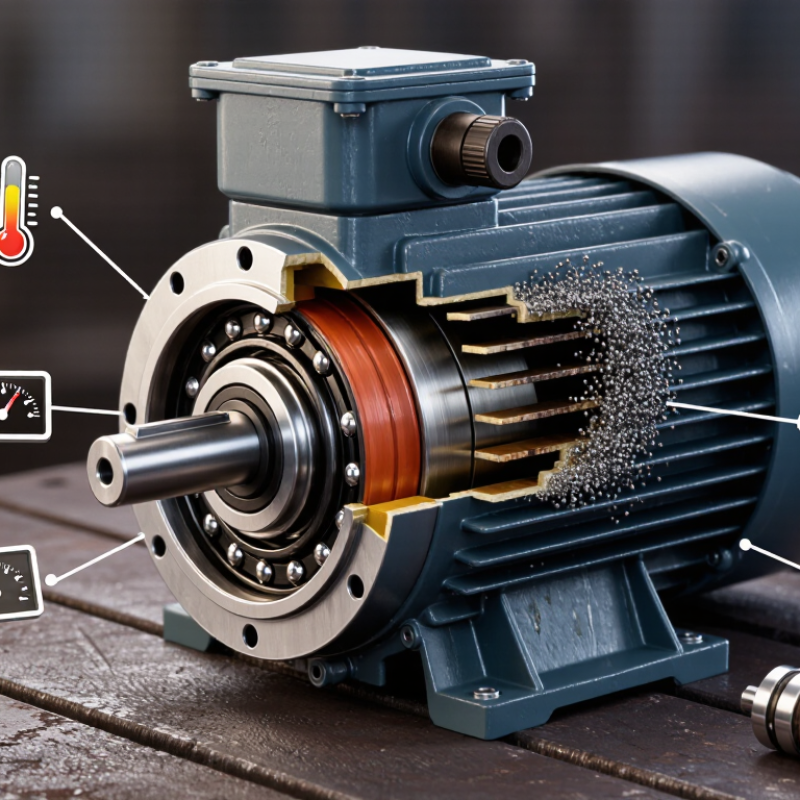
A useful question is: what are the common causes of electric motor failure? Typical causes include overheating, insulation breakdown, bearing wear, contamination, poor lubrication, voltage imbalance, and excessive mechanical load. Dust can block cooling passages, while moisture may damage insulation and encourage corrosion. A misaligned coupling can add vibration and strain the bearings. Small problems matter.

This guide explains how these failure modes develop and what practical evidence can help distinguish them. It also covers warning signs, inspection methods, and maintenance steps that may reduce unplanned downtime. For example, temperature readings, vibration trends, and current measurements can reveal changes over time. Keep records; memory is unreliable.

Diagnosis still requires care. Similar symptoms can have different causes, and replacing a bearing without checking alignment may only postpone another failure. Even experienced teams can misread the first signs. That is worth remembering. Use this guide as a starting point, not a substitute for manufacturer instructions or assessment by a qualified motor technician.
2026 Best Guide to Common Causes of Electric Motor Failure?

Classify Motor Failure Modes Using IEEE and EPRI Reliability Data

Classifying motor failures with IEEE and EPRI reliability data starts with separating the observed symptom from the failure mode. A tripped drive is a symptom; insulation breakdown or a damaged bearing may be the underlying mode. This distinction helps maintenance teams compare events consistently instead of grouping every shutdown together.

Common categories include stator winding faults, rotor damage, bearing failures, insulation deterioration, and cooling or contamination problems. For example, a hot bearing with discolored grease points toward a mechanical issue, while winding resistance imbalance may indicate an electrical fault. Record the failed component, evidence, operating conditions, and confirmed cause separately. Not every case is clear.

IEEE and EPRI datasets can guide trend analysis, but their categories and study populations may differ. A plant should document the classification rules it uses before comparing its own records with external reliability data. Include motor age, load, starts, environment, and maintenance history; otherwise, a rise in failures may reflect changing exposure, not worsening equipment. Keep uncertainty visible. Some investigations end with a likely cause, not a proven one. That distinction matters when prioritizing inspections, spare parts, and corrective work.

EPRI Studies: Bearing Faults Cause About 40% of Motor Failures

2026 Best Guide to Common Causes of Electric Motor Failure?

EPRI studies indicate that bearing faults account for about 40% of electric motor failures. That estimate makes bearings a practical place to focus inspections. It is not a fixed rate for every motor. Motor design, workload, installation, and maintenance history all affect failure patterns.

Bearing damage can begin quietly. A faint rumble, rising housing temperature, or growing vibration may appear before a motor stops. Poor lubrication, contaminated grease, misalignment, and excessive loads can all accelerate wear. During a routine inspection, technicians can check for unusual noise, inspect lubricant condition, and compare vibration readings with earlier measurements. Small changes matter.

A useful maintenance record includes operating hours, load conditions, temperatures, and repair findings. These details help distinguish gradual wear from a sudden problem. Still, records are often incomplete, and a single vibration reading can mislead. I would be cautious about treating any one measurement as proof of bearing failure. Trend data is more useful, especially when readings are taken consistently and paired with physical inspection.

Trace Winding Damage to Heat, Overload, and Insulation Stress

2026 Best Guide to Common Causes of Electric Motor Failure?

Trace Winding Damage to Heat, Overload, and Insulation Stress

Winding damage often builds quietly before a motor stops. Heat is a common culprit. A motor running above its rated load draws excess current, warming the copper windings and stressing their insulation. Poor ventilation, blocked cooling fins, or frequent starts can add more heat. A dusty fan cover may seem minor, but it can trap warmth where the motor needs airflow.

Insulation also weakens over time. Repeated thermal cycling, vibration, moisture, and electrical spikes can make it brittle or cracked. Once insulation fails between turns, a local short can create even more heat, accelerating damage. Look for darkened varnish, a sharp burnt odor, or uneven temperature across the housing. These clues matter, but they do not confirm the cause. I have seen a motor blamed on overload when a loose connection was contributing. Diagnosis deserves a second look.

Tips: Keep cooling passages clear and record load, starts, and operating temperature. Compare readings over time, not just against a single moment. If winding damage is suspected, disconnect power and have a qualified technician check current, winding resistance, and insulation condition.

Assess Voltage Imbalance and Harmonics Against NEMA MG 1

Voltage imbalance can quietly increase motor heating, even when all three line voltages look close. Measure line-to-line voltage at the motor terminals while it runs under a representative load. Calculate imbalance as the greatest deviation from the average voltage, divided by that average, then multiply by 100. Small numbers matter. A loose connection, uneven phase loading, or a failing contact can create a persistent difference.

NEMA MG 1 provides guidance on voltage unbalance and its effects on motor performance. Around 1% is a commonly cited upper boundary for many three-phase motors; greater imbalance may require output derating. Check the applicable MG 1 edition and motor documentation rather than treating that figure as universal. Record all three readings, load conditions, and motor temperature. A single snapshot can miss a problem that appears only during a production shift.

Harmonics need a separate check. Use a power-quality analyzer to capture voltage distortion and the harmonic spectrum at the motor supply. Compare results with the requirements relevant to the motor design and supply arrangement in the applicable MG 1 sections. One total harmonic distortion value alone does not establish a universal pass or fail. Look for patterns: elevated fifth or seventh harmonics, for example, can contribute to heating and torque pulsation. The diagnosis may still be imperfect; instrument settings, measurement location, and changing loads can affect readings. Keep the data and repeat measurements when operating conditions differ.

Diagnose Vibration and Bearing Wear Using ISO 20816 Guidance

An electric motor rarely fails without warning, but vibration clues are easy to misread. ISO 20816 offers a framework for evaluating machine vibration; it does not provide one universal bearing-failure threshold. The relevant part depends on machine type, mounting, and operating conditions. Measure at consistent points on the bearing housing, with the motor running at stable speed and load. Small setup changes can distort comparisons.

Record overall vibration and compare it with the applicable ISO criteria and the motor’s baseline. Rising levels deserve attention, especially when they appear alongside unusual noise, heat, or grease discoloration. A spectrum can help separate likely causes: a loose foot may create harmonics, while bearing damage can produce repeated high-frequency impacts. Use suitable acceleration or envelope measurements when available. Not proof. A single reading cannot confirm a worn bearing.

Check alignment, lubrication, mounting bolts, and load before assigning a cause. Then repeat measurements under similar conditions and track the trend. That distinction is easy to miss. ISO 20816 helps assess vibration severity, while diagnosis needs operating history and supporting evidence. If readings change sharply, inspect promptly rather than waiting for a convenient shutdown. Even careful measurements have limits. A sensor placed differently, or a motor tested under a different load, may tell a misleading story.

FAQS

What share of motor failures may involve bearing faults?

Studies estimate about 40%, but the figure varies with motor design, workload, installation, and maintenance history. It is a useful clue, not a guarantee.

What early signs can point to bearing wear?

Listen for a faint rumble and check for rising housing temperature or vibration. Grease that looks discolored may also deserve attention. Small changes matter.

What should technicians check during routine bearing inspections?

Check for unusual noise, inspect lubricant condition, and compare vibration readings with earlier measurements. Also review alignment, mounting bolts, and operating load.

How can poor lubrication or contamination affect bearings?

Poor lubrication, contaminated grease, misalignment, and excessive loads can speed up wear. A clean-looking motor may still have a developing problem.

How should voltage imbalance be assessed?

Measure all three line-to-line voltages at the motor terminals under a representative load. Compare each reading with the average. Imbalance is the greatest deviation divided by the average, multiplied by 100. Around 1% is often cited as an upper guide, not a universal limit.

How can technicians check for harmful harmonics?

Use a power-quality analyzer to record voltage distortion and the harmonic spectrum. Look for patterns, including elevated fifth or seventh harmonics. One distortion value alone cannot confirm a problem.

Can one vibration reading confirm a worn bearing?

No. Not proof. Measure at consistent points under similar speed and load, then compare readings over time. A different sensor position or load can distort the comparison.

What information belongs in a motor maintenance record?

Record operating hours, load conditions, temperatures, vibration readings, and repair findings. Records can be incomplete, so I would be cautious about trusting one measurement alone.

Conclusion

Understanding what are the common causes of electric motor failure starts with recognizing how faults are classified in reliability studies. Bearing problems account for roughly 40% of reported motor failures, making lubrication, contamination, alignment, and wear important areas to inspect. Winding damage is another major concern and often develops when excessive heat, sustained overload, or insulation stress gradually weakens the motor’s electrical system.

Electrical supply conditions can also shorten motor life. Voltage imbalance and harmonic distortion may create uneven heating and reduce efficiency, so measurements should be compared with applicable motor-design guidance. Mechanical warning signs—including increased vibration, unusual noise, and rising bearing temperatures—can help reveal wear before a breakdown occurs. Use vibration limits and trend data appropriate to the equipment, then investigate changes promptly. Together, electrical checks, thermal observations, and condition monitoring provide a practical way to identify failure risks and plan maintenance before damage becomes severe.

Aria

Aria

Aria is a dedicated marketing professional with a deep passion for innovative strategies and a keen understanding of our company's product offerings. With a wealth of experience in the industry, Aria excels at crafting engaging content that highlights the unique features and benefits of our......