How Long Does an Electric Motor Last 7 Best Factors?

Time:2026-11-24 Author:Henry
0%

How long does an electric motor last? The honest answer is that no single number fits every motor. A small fan motor in a clean workshop faces different conditions from a pump motor running continuously in a hot, dusty plant. The U.S. Department of Energy’s Better Plants program reports that motor-driven systems use roughly 68% of U.S. industrial electricity. The International Energy Agency has estimated their global share at about 45%. Those figures show how much is at stake, but they do not predict an individual motor’s service life.

Standards help define performance, not a guaranteed lifespan. IEC 60034-1 and NEMA MG 1 specify requirements for rotating electrical machines, while actual durability depends on installation and use. In practice, heat, electrical loading, frequent starts, vibration, moisture, bearing lubrication, alignment, and maintenance can all influence wear. A motor’s nameplate may look reassuring. Its operating records tell more.

This guide examines seven factors that help explain motor life and identify early warning signs. It also distinguishes expected service life from the point when repair or replacement becomes practical. A bearing that growls, a housing that feels unusually hot, or repeated insulation alarms deserves investigation—not guesswork. There is a limitation worth admitting: published averages cannot substitute for condition data from your own equipment. Record operating hours, temperatures, vibration, and repairs, then compare trends over time. That evidence makes a lifespan estimate more useful, though never exact.
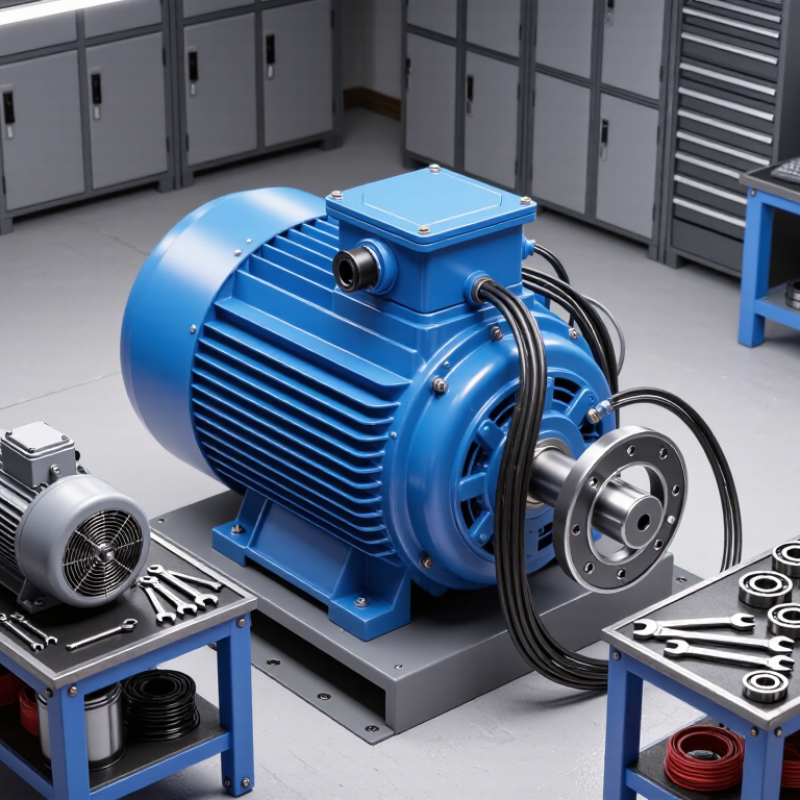
How Long Does an Electric Motor Last 7 Best Factors?

Define Service Conditions: IEC 60034-1 Classifies S1 as Continuous Duty

IEC 60034-1 defines S1 as continuous running duty: a motor operates at constant load long enough to reach thermal equilibrium. In practice, that means the motor’s temperature has largely stabilized—not that it can safely handle any load indefinitely. A pump running steadily through a full shift may fit S1; a conveyor that repeatedly starts, stops, and sits idle may not.

This distinction matters for service life. Heat builds inside windings and bearings, while dust, poor ventilation, and frequent overloads can push temperatures higher. The U.S. Department of Energy’s 2002 United States Industrial Electric Motor Systems Market Opportunities Assessment reports that motor systems use about 63% of industrial electricity. That figure speaks to their scale, not a guaranteed lifespan. Check the actual load, ambient temperature, cooling airflow, and daily operating hours before estimating years of service. Small details count.

A maintenance log can reveal whether “continuous” describes reality. Record operating hours, starts per hour, and temperature readings near the motor frame. If readings keep climbing, the assumed S1 condition may be wrong—or cooling may be restricted. IEC duty classification helps describe use, but it does not predict an exact failure date. I would not treat the label alone as a life guarantee.

Heat and Insulation: IEC 60085 Rates Class F at 155°C and Class H at 180°C

Heat and insulation can decide whether an electric motor lasts years or fails early. IEC 60085 assigns thermal classes to insulation systems: Class F is rated at 155°C while Class H is rated at 180°C. These figures describe thermal endurance, not a safe winding temperature under every operating condition. That distinction matters. IEC 60034-1 also accounts for winding temperature rise and service conditions, so ambient heat, load, and cooling all affect the motor’s actual thermal stress.

A motor running in a dusty workshop may have blocked cooling fins and a winding temperature far above what its surroundings suggest. IEC 60216-1 evaluates insulation thermal endurance using temperature-based aging methods; it does not promise a fixed service life. Engineers often use the rule of thumb that each 10°C increase can roughly halve insulation life, but real results depend on the insulation system and duty cycle. A Class H rating offers more thermal headroom than Class F, not immunity from damage. And honestly, choosing the higher class alone is an incomplete fix. Check actual winding temperatures, ventilation, and load history during maintenance, then compare readings with the motor’s specified limits.

Bearings and Lubrication: ISO 281 L10 Life Represents 90% Bearing Reliability

Bearings can decide whether an electric motor runs smoothly for years or starts rumbling early. ISO 281 defines L10 life as the point that 90% of a group of identical bearings are expected to reach or exceed under stated conditions. It is a statistical estimate, not a promise for one motor. The calculation depends on bearing load and rating, while real service also depends on speed, temperature, alignment, and contamination. A faint growl near the drive end may signal trouble, but sound alone cannot confirm the cause.

Lubrication is a major part of the picture. Too little grease can leave rolling surfaces unprotected; too much can increase heat and drag. Dust, moisture, and old lubricant can also shorten bearing life. In practice, a clean relubrication routine and correct grease quantity matter more than simply adding grease often. L10 does not capture every failure mode, either. Electrical damage, poor installation, or repeated overloads can end a motor’s service life sooner.

Tips: Follow the motor’s lubrication schedule and use the specified lubricant and quantity. Check for rising bearing temperature, unusual vibration, and changes in sound. Keep records. Compare readings over time, since one measurement can mislead. When conditions are harsh, ask a qualified technician to review the bearing and operating data.

How Long Does an Electric Motor Last? 7 Best Factors — Bearings and Lubrication: ISO 281 L10 Life Represents 90% Bearing Reliability

ISO 281 estimates rolling-bearing fatigue life under defined operating conditions. The factors below help explain what can influence bearing life and, in turn, motor reliability.

Factor What to Measure or Check How It Affects Bearing Life Practical Guidance
1. Bearing load and rating capacity Dynamic load rating C and equivalent dynamic bearing load P. Basic rating life: L10 = (C/P)p million revolutions. For ball bearings, p = 3; for roller bearings, p = 10/3. For a ball bearing, doubling the equivalent load reduces calculated basic L10 life to one-eighth, if other conditions stay the same.
2. Operating speed Rotational speed in revolutions per minute (r/min) and the bearing’s operating speed limits. For a given life in revolutions, higher speed means fewer operating hours. L10h = (106 / 60n) × (C/P)p, where n is speed in r/min. Use the actual operating speed and load profile when estimating hours; variable-speed duty may require a duty-cycle calculation.
3. Required reliability The desired probability that a bearing population will reach a specified life without fatigue failure. Basic L10 life corresponds to 90% reliability: statistically, 10% of an adequately large group may experience fatigue failure before that life under the stated conditions. L10 is a statistical rating, not a guaranteed service life for an individual bearing or a complete motor.
4. Lubrication and operating temperature Lubricant type, viscosity at operating temperature, quantity, replenishment interval, and bearing temperature. Suitable lubrication separates rolling surfaces and limits wear. Inadequate, degraded, or excessive lubricant can raise friction and temperature and reduce service life. Follow the bearing and motor manufacturer’s lubrication instructions. Do not assume one relubrication interval fits every speed, load, or environment.
5. Contamination and sealing Ingress of dust, moisture, process material, or other particles; condition of seals and shields. Contamination can damage raceways and rolling elements and may shorten life substantially; its effect is not represented by a single universal percentage. Choose suitable sealing for the environment and keep lubricant, tools, and work areas clean during maintenance.
6. Alignment and installation Shaft and housing alignment, fits, internal clearance, mounting method, and vibration. Misalignment, incorrect fits, or installation damage can create additional loads and localized stress that are not captured by a simple basic L10 calculation. Use appropriate mounting tools and verify alignment, fits, and vibration against the motor and bearing specifications.
7. Electrical current through bearings Evidence of electrical discharge damage, such as fluting on raceways, and the motor’s grounding and drive-system setup. Electrical currents through a bearing can cause surface damage and lubricant deterioration, leading to noise, vibration, and premature failure. For inverter-fed motors or suspected current-related damage, assess the installation and use an appropriate mitigation method specified for the motor system.

Important: ISO 281 L10 is a bearing fatigue-life estimate, not a prediction of total electric-motor life. Motor service life also depends on insulation, cooling, operating conditions, maintenance, and other components. Modified bearing-life calculations account for additional factors; actual results depend on the application.

Power Quality and Starts: NEMA MG 1 Advises Voltage Unbalance of 1% or Less

Voltage quality can quietly shorten an electric motor’s service life. NEMA MG 1 advises limiting voltage unbalance at the motor terminals to 1% or less. Measure all three phase-to-phase voltages under normal operating conditions, then compare each reading with their average. A small difference matters.

For example, readings of 460, 460, and 451 volts average about 457 volts, producing roughly 1.3% unbalance. That exceeds the guideline. Even modest voltage unbalance can create much larger current unbalance, raising winding temperatures and stressing insulation. Heat is cumulative. Repeated starts add to the strain, especially when voltage dips during acceleration or the motor starts frequently under heavy load. A motor may still run, which can make the problem easy to miss.

Check supply voltage at the motor while it is running, and note readings during starting if practical. Loose connections, uneven loads, or supply issues may contribute; measurements can help narrow the cause. Correcting the source is better than assuming a larger motor will solve it. Still, a single reading cannot predict a precise motor lifespan. Load, cooling, maintenance, and start frequency matter too, and real installations are rarely perfect.

Environment and Maintenance: Track Contamination, Vibration, Overloads, and Wear

An electric motor has no dependable expiration date. Dust, moisture, and oil mist can contaminate windings or bearings, while blocked cooling fins trap heat. Small deposits matter: a motor running hot beside a dusty conveyor may age faster than one in a clean, ventilated room. The U.S. Department of Energy’s 2014 motor-systems sourcebook estimated that motor-driven systems used about 68% of U.S. manufacturing electricity. That figure describes energy use, not motor life—a distinction worth keeping clear.

Vibration often gives an early warning. A rising reading may point to misalignment, looseness, or bearing wear; compare readings with the motor’s own baseline and assess them using suitable guidance, such as ISO 20816-3. Overloads are harder to spot when they happen briefly. Repeated high current and excess heat can damage insulation over time. Maintenance records help connect these clues, though even careful tracking cannot predict every failure.

Tips: Keep vents clear, inspect for grit and moisture, and log temperature, current, and vibration under similar operating conditions. Check alignment after moving equipment. Be honest about gaps in the log; missing readings can make a healthy trend look certain when it is not.

FAQS

What do Class F and Class H insulation ratings mean?

Class F is rated for thermal endurance at 155°C. Class H is rated at 180°C. These ratings are not safe winding-temperature limits for every operating condition.

Does a higher insulation class prevent motor damage?

No. It provides more thermal headroom, but cannot prevent damage from poor cooling, heavy loads, or harsh conditions. The rating alone is not enough.

How can I tell if a motor is running too hot?

Measure winding temperature and compare it with the motor’s specified limits. Check the load and ventilation too. Dusty cooling fins can trap heat.

What does L10 bearing life tell me?

L10 is a statistical estimate. Under stated conditions, 90% of identical bearings are expected to reach or exceed that life. It does not predict one motor’s exact lifespan.

Can adding more grease extend bearing life?

Not necessarily. Too little grease can leave surfaces unprotected, while too much can add heat and drag. Follow the specified lubricant and quantity.

What signs may point to bearing trouble?

Rising temperature, unusual vibration, or a new rumbling sound can be warning signs. Sound alone cannot confirm the cause. Check trends over time.

How do dust and moisture affect a motor?

They can contaminate windings and bearings. Oil mist and blocked vents may add further stress. Small deposits can matter.

What maintenance records are useful?

Log temperature, current, vibration, and visible contamination under similar conditions. Note missing readings honestly. A neat log can still be incomplete.

Conclusion

How long does an electric motor last? There is no single answer: its service life depends on how it is operated, the heat it experiences, and the condition of its components. IEC 60034-1 identifies S1 as continuous duty, so a motor designed for this service must be suited to sustained operation under its specified load. Insulation also matters: IEC 60085 assigns Class F a thermal rating of 155°C and Class H a rating of 180°C, but operating near a thermal limit for extended periods can accelerate aging.

Bearings and lubrication are common life-limiting factors. ISO 281’s L10 life is a statistical estimate at which 90% of a bearing population is expected to reach or exceed its calculated life, not a guaranteed motor lifespan. Electrical conditions matter too; NEMA MG 1 advises keeping voltage unbalance at 1% or less. Regularly checking contamination, vibration, overloads, lubrication, and wear can reveal problems early and help extend reliable service.

Henry

Henry

Henry is a dedicated marketing professional with a profound expertise in the company's offerings. With years of experience in the industry, he possesses an impressive understanding of the market dynamics and consumer behaviors that drive success. Henry is committed to sharing his insights through......