Industrial motors rarely fail without warning. Rising bearing temperatures, unusual vibration, and dust near cooling vents can signal trouble. Yet busy teams may overlook these clues while meeting production targets. Learning how to reduce maintenance costs for industrial motors begins with noticing small changes before they become expensive stoppages. A simple log of operating hours, temperatures, and repair dates can reveal patterns that memory alone often misses.
The most effective maintenance plans combine routine inspections with measurements suited to each motor and its working conditions. Check alignment, lubrication, electrical connections, ventilation, and load; follow the manufacturer’s instructions and site procedures. Use vibration or temperature readings to track trends, not as automatic proof of a fault. Small details matter. A blocked intake or incorrect grease quantity can shorten component life. So can an inspection schedule that ignores harsh dust, moisture, or frequent starts.
This article outlines practical ways to prevent avoidable repairs, improve maintenance planning, and make replacement decisions with clearer evidence. It also considers spare parts, staff training, and the value of recording what actually failed. Experience on one production line does not always transfer neatly to another. That is worth admitting. Motor design, age, duty cycle, and operating environment all affect costs, so teams should review results and adjust their plans rather than trust a fixed checklist. The goal is not maintenance at any price; it is reliable operation with fewer surprises and better-informed spending.
Industrial motor maintenance costs rarely come from one dramatic failure. They build up through labor, replacement parts, unplanned downtime, and repeat repairs. A technician may spend hours tracing a vibration that began with a loose mounting bolt. Meanwhile, production slows or stops. That lost output can cost more than the bearing itself. Small issues matter.
Parts are another visible expense. Bearings, seals, insulation, and cooling fans wear at different rates, depending on load, temperature, dust, and operating hours. Replacing parts too late can damage a shaft or winding; replacing them too early wastes serviceable life. Keep records of repairs, operating conditions, and measured vibration or temperature. Patterns can reveal whether failures are isolated or recurring.
Labor costs rise when inspections are rushed, access is difficult, or troubleshooting starts without useful history. Misalignment, poor lubrication, blocked ventilation, and electrical imbalance may produce similar symptoms, so changing parts by guesswork can add expense. I have seen maintenance notes that say only “motor noisy.” Not enough. Record where the sound occurs, when it appears, and what measurements support the diagnosis. The log will still have gaps, and real operating conditions are messy, but better details help teams identify the main cost drivers before the next repair.
Labor and replacement parts often make up the largest portions of motor maintenance spending. This illustrative cost breakdown is for planning purposes; actual costs vary by motor type, operating conditions, and maintenance practices.
Before changing maintenance intervals, document how each motor performs under normal operating conditions. Record its rated power, operating hours, driven equipment, and typical load. Measure vibration, casing temperature, and electrical current with suitable instruments. Note the measurement location and operating state each time; readings taken under different loads are hard to compare.
Look for practical warning signs during inspection: unusual bearing noise, loose mounting bolts, blocked cooling fins, damaged cables, or grease leakage. Check that ventilation paths are clear, and compare measured values with manufacturer limits and site requirements. Small changes matter. A temperature reading near the drive-end bearing means more when recorded at the same load and ambient conditions each month.
A baseline is not a diagnosis. It is a reference for spotting change and planning inspections before minor issues cause unplanned stoppages. Store readings with dates, equipment identifiers, and brief notes about recent repairs. If vibration rises, repeat the measurement and check alignment, foundation, and connected equipment before replacing parts. Early records may be inconsistent; acknowledge that uncertainty, improve measurement methods, and avoid treating one unusual reading as a trend.
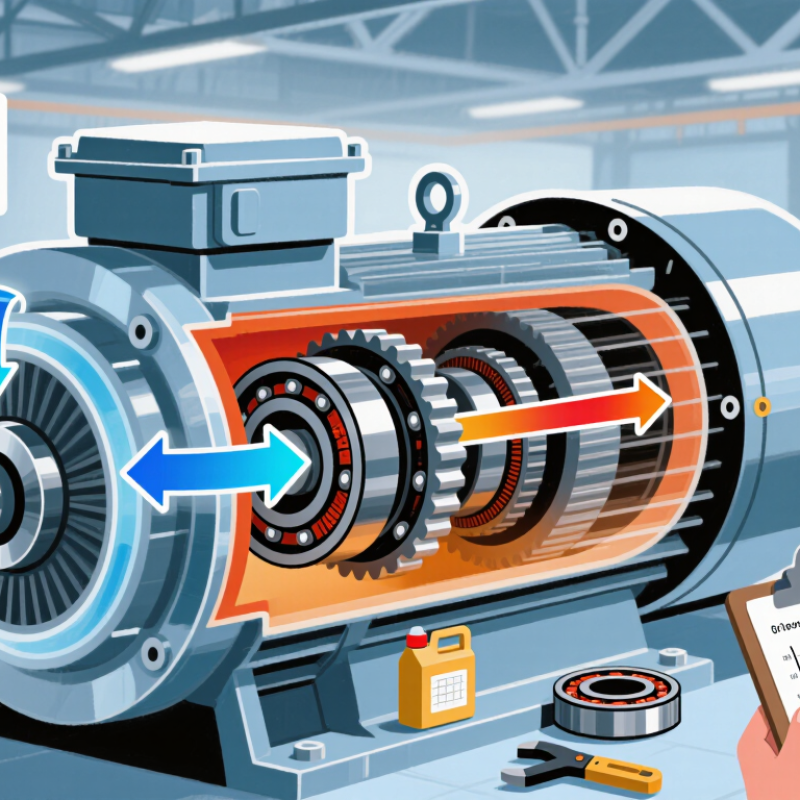
Preventive maintenance helps industrial motors run efficiently and reduces costly emergency repairs. Set inspection intervals based on operating hours, load, dust, heat, and the motor manufacturer’s guidance. During routine checks, note unusual vibration, rising case temperature, and changes in sound. Inspect cooling fins for packed dust, and check accessible terminals and couplings for looseness or wear. Isolate power and follow site safety procedures before hands-on work. Small changes matter.
Tips: Keep a simple log of readings, dates, and repairs. Compare vibration and temperature readings over time, rather than relying on memory. Clean blocked air passages with suitable methods, and lubricate bearings only as specified. Too much grease can be harmful. Use the right amount.
A maintenance log can reveal patterns: a motor that runs hotter each week may need attention before it fails. Check alignment after nearby equipment or foundations have been disturbed. A perfect schedule is unlikely; production demands and missed checks happen. Review skipped tasks monthly, and adjust the plan when operating conditions change. If readings exceed site limits, have qualified maintenance staff assess the motor before returning it to service.
Industrial motors often use more energy when they run hot, vibrate, or operate far below their intended load. Check the area around each motor during routine rounds. Dust packed against cooling fins can trap heat, while blocked vents restrict airflow. A simple thermometer can reveal a rising case temperature before it becomes an unplanned stop. Keep clearances open, and clean surfaces using methods approved for the equipment.
Operating conditions matter too. Compare motor current across phases with a suitable meter; an imbalance may point to a supply or connection issue. Check whether the driven machine is overloaded, misaligned, or cycling more often than expected. These faults can increase strain even when the motor itself appears sound. Not every warm motor is failing, though. Ambient temperature and duty cycle affect readings, so record them alongside temperature and vibration trends. Small changes are easier to interpret over time.
Lubrication deserves care. Too much grease can raise bearing temperature, so follow the motor’s specified type and interval. Keep a basic log of readings, cleaning, and adjustments. It will not explain every fault. But it can show when normal conditions begin to drift.
A motor’s maintenance history should read like a shop-floor log, not a stack of invoices. For each asset, record operating hours, starts, bearing temperatures, vibration readings, insulation-test results, lubricant changes, failures, labor, and lost production. Measure from the same points at consistent intervals. A rising trend matters more than one noisy reading. Not every spike matters. Note ambient temperature and load, since both can distort comparisons. For every repair, record the suspected cause, parts used, labor hours, and whether the fault returned.
Set alert thresholds using the motor’s baseline and applicable technical limits, then review results monthly. The U.S. Department of Energy’s Operations & Maintenance Best Practices guide estimates predictive maintenance can save 8–12% compared with preventive maintenance and 30–40% compared with reactive maintenance. These are broad program-level estimates, not guarantees for individual motors. Treat them as a reason to measure, not a promised budget cut. When failures recur, repair costs rise, or insulation readings deteriorate, compare repair costs and downtime risks with replacement. Include energy efficiency, repair quality, lead time, and the motor’s importance to production. Agree on a decision rule before a breakdown. It may be imperfect. Revise it after each outage; the records may expose assumptions that need rethinking.
Record rated power, operating hours, driven equipment, and typical load. Note vibration, casing temperature, and current readings with dates and measurement locations.
Load and ambient temperature affect readings. Comparing measurements taken at different loads can be misleading.
Listen for unusual bearing noise and check mounting bolts, cooling fins, cables, and grease leakage. Small changes matter.
Set intervals using operating hours, load, dust, heat, and equipment guidance. Review missed checks monthly; a perfect schedule is unlikely.
Repeat the measurement, then check alignment, the foundation, and connected equipment. One unusual reading is not a trend.
Yes. Dust can trap heat and restricted vents can reduce airflow. Keep clearances open and clean surfaces using suitable methods.
Use the specified grease type and interval. Too much grease can raise bearing temperature.
It may point to a supply or connection issue. Check the driven machine for overload, misalignment, or frequent cycling as well.
It helps reveal changes in temperature, vibration, cleaning, and repairs. Early records may be uneven, so improve the method rather than pretending they are perfect.
Reducing industrial motor maintenance costs starts with understanding where the money goes. Common expenses include emergency repairs, replacement parts, unplanned downtime, and excess energy use. Inspect maintenance records and assess each motor’s condition to establish a reliable baseline, noting factors such as vibration, temperature, noise, lubrication, and operating performance. This makes it easier to identify developing problems and prioritize attention.
A consistent preventive maintenance program can limit wear and catch faults before they cause costly failures. Keep motors clean, lubricate them correctly, check electrical connections, and schedule inspections according to operating conditions. Improving ventilation, reducing excessive loads, and maintaining proper alignment can also support efficiency and extend service life. Track repair costs, downtime, energy use, and inspection findings to measure progress. With this information, facilities can make informed decisions about repairs or replacement and apply a practical plan for how to reduce maintenance costs for industrial motors over time.
RedCat Motors