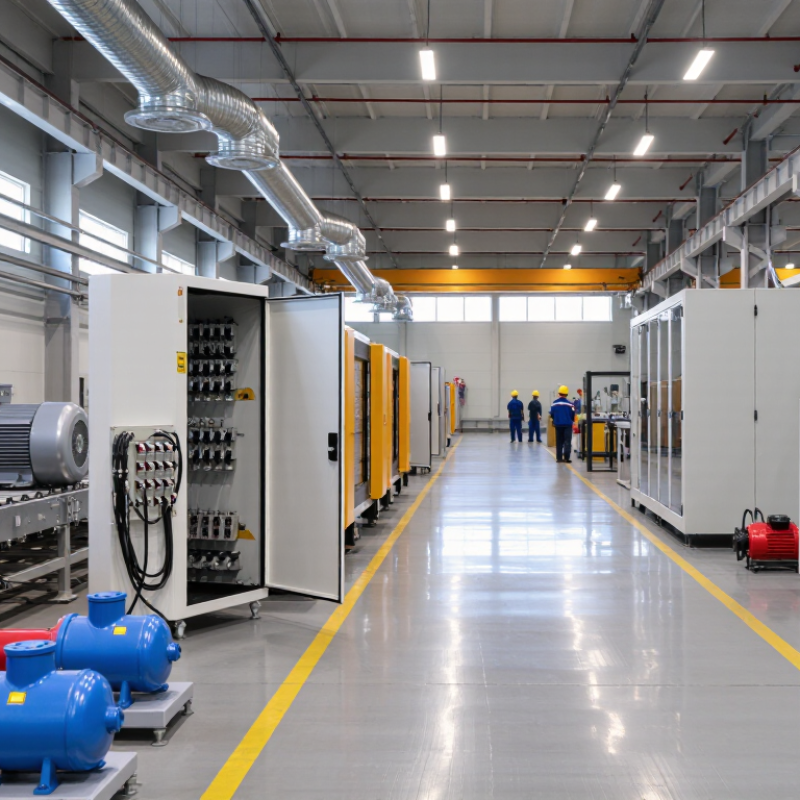
Top Reasons Why Motor Efficiency Matters in Manufacturing?

Time:2026-10-18 Author:Sienna
0%

Motor efficiency is a practical manufacturing issue, not merely an engineering preference. The International Energy Agency reports that electric motor systems consume about half of global electricity. In factories, motors drive pumps, compressors, conveyors, fans, and machine tools. A small efficiency loss can therefore become a large operating cost.

So, why is motor efficiency important in manufacturing? The answer begins with energy waste. An inefficient motor converts more electricity into heat, increasing monthly bills and stressing plant cooling systems. The U.S. Department of Energy identifies motor-driven equipment as a major industrial energy load and recommends system-level assessments, not motor replacement alone. This distinction matters. A well-designed motor can still waste energy when it is oversized, poorly aligned, or operated far below its rated load.

The European Commission’s Ecodesign research also shows the scale of motor-system consumption across Europe. High-efficiency motors, correctly sized drives, and preventive maintenance can reduce losses while supporting stable production. Consider a conveyor motor running beside a hot press: excessive vibration, rising casing temperature, or unusual noise may signal avoidable inefficiency. These details are easy to overlook.

Efficiency also affects reliability. Lower heat generation can reduce insulation stress and extend bearing life, although results depend on installation and maintenance quality. That caveat matters. No single upgrade solves every factory’s energy problem. Engineers should review load profiles, duty cycles, power quality, and maintenance records before investing. A spreadsheet may predict savings, but the production floor confirms them. This article examines the top reasons motor efficiency matters in manufacturing, using established industry guidance and practical operating evidence.

Top Reasons Why Motor Efficiency Matters in Manufacturing?

What Motor Efficiency Means in Manufacturing

Motor efficiency in manufacturing describes how much electrical energy becomes useful mechanical output. The rest becomes heat, friction, noise, and magnetic loss. A motor operating at 90% efficiency converts 90 units of electrical energy into motion, while losing 10 units internally.

This matters on the factory floor. Inefficient motors draw more power during pumps, conveyors, compressors, and machine-tool cycles. Their housings may run hotter, especially in dusty areas with restricted airflow. Over time, excess heat can weaken insulation and shorten service life. A practical assessment should compare input power with delivered load, not rely only on the nameplate rating. Efficiency also changes with load. A motor designed for heavy work may perform poorly when operated far below its rated capacity.

Measurement reveals more than assumptions. Technicians can record voltage, current, power factor, temperature, vibration, and operating hours. Reviewing monthly kilowatt-hour data helps connect motor behavior with production costs. Alignment, lubrication, clean cooling paths, and correct tension often protect efficiency. Variable-speed control can reduce energy use when demand changes, though poor settings may create new losses.

One efficiency figure can mislead. Real factories rarely operate under perfect conditions. Production schedules shift, maintenance is uneven, and sensors may need calibration. A careful team checks readings repeatedly and compares them with process output. Replacing a motor without examining the driven equipment may waste money. Sometimes the real problem is an oversized pump, a blocked filter, or a worn coupling.

How Motor Efficiency Affects Energy Consumption

Motor Efficiency and Its Impact on Energy Consumption

In manufacturing, motor efficiency directly influences how much electricity a machine consumes. A motor converts electrical power into mechanical movement, but some energy becomes heat, noise, and vibration. An inefficient motor needs more input power to deliver the same output. That difference continues during every production hour.

Consider a 30-kilowatt motor running 8,000 hours annually. At 90% efficiency, it may draw about 33.3 kilowatts. At 96% efficiency, it may draw close to 31.25 kilowatts.

At 90% efficiency, it may draw about 33.3 kilowatts.
At 96% efficiency, it may draw close to 31.25 kilowatts.

The gap can represent more than 16,000 extra kilowatt-hours each year. That is measurable energy waste, not a theoretical concern. Small motors can also create large costs when many operate continuously. Pumps, fans, conveyors, and compressors often run longer than production managers expect.

Efficiency does not depend on the nameplate alone. Poor alignment, overloaded shafts, blocked ventilation, and worn bearings can increase consumption.

I have seen energy estimates look impressive before maintenance data exposed the real problem. That estimate was incomplete.

Measuring current, voltage, load, temperature, and operating hours gives a more reliable picture. However, measurements can still vary with production demand. A motor running lightly may perform differently from one working near its rated load. Replacing equipment without checking those conditions may waste capital. Regular inspections and practical load analysis help manufacturers reduce unnecessary consumption while protecting production stability.

The Link Between Efficient Motors and Production Performance

Top Reasons Why Motor Efficiency Matters in Manufacturing?

The Link Between Efficient Motors and Production Performance

Efficient motors do more than reduce electricity bills. They convert more electrical input into useful mechanical power, leaving less energy as heat. In a busy plant, that difference appears beside conveyors, pumps, fans, and compressors. A motor running cooler can support steadier operation during long production shifts. Small gains matter.

Production performance depends on consistency. An efficient motor often delivers stable torque with fewer thermal stresses. This helps equipment maintain speed when material loads change suddenly. Less heat can also reduce insulation damage, bearing stress, and unplanned maintenance. A stopped motor may delay an entire line, not just one machine. Every minute counts.

Plant teams should measure real operating conditions, not rely only on nameplate ratings. A motor may be efficient at full load but poorly matched to a lightly loaded process. Oversized equipment can waste energy and respond less effectively to control changes. This is where practical audits reveal uncomfortable details. Our first estimates are not always accurate. Load profiles, start-stop cycles, ventilation, alignment, and maintenance history all deserve attention. Recording current, temperature, vibration, and output over several shifts creates stronger evidence. The best improvement may involve sizing, control settings, or mechanical repair instead of replacing the motor. That judgment requires both technical data and production experience.

Factors That Influence Motor Efficiency in Industrial Systems

Top Reasons Why Motor Efficiency Matters in Manufacturing?

Factors That Influence Motor Efficiency in Industrial Systems

Motor efficiency depends on more than the rating printed on its nameplate. Load is a major factor. A motor operating far below its designed load often wastes energy through fixed electrical losses. Oversized motors may run reliably, yet they can increase operating costs. Small losses add up.

Voltage imbalance, poor power quality, and harmonic distortion also affect performance. Even a slight voltage difference between phases can raise current and winding temperature. Heat is especially damaging because insulation ages faster at elevated temperatures. Dusty vents, blocked cooling paths, and high ambient temperatures make the problem worse.

Mechanical conditions matter just as much. Misaligned shafts, worn bearings, tight belts, and excessive friction force the motor to work harder. In maintenance inspections, unusual vibration often appears before a serious failure. That signal should not be ignored. Regular cleaning, lubrication, alignment checks, and thermal inspections can protect efficiency.

Operating patterns deserve attention too. Frequent starts and stops consume more energy than steady operation. Variable-speed control can reduce consumption in pumps and fans, but incorrect settings may create new losses. Engineers should compare measured current, output, temperature, and runtime instead of trusting assumptions. The numbers can surprise. Efficiency tests are useful, but field conditions are imperfect, and one measurement cannot explain every production problem.

Top Reasons Why Motor Efficiency Matters in Manufacturing? - Factors That Influence Motor Efficiency in Industrial Systems

Efficiency Dimension Verified Industrial Relationship Typical Data or Reference Range Effect on Manufacturing Operations Practical Improvement Measure
Electrical Efficiency Motor efficiency is the ratio of mechanical output power to electrical input power. Efficiency (%) = Output Power ÷ Input Power × 100. Industrial motors commonly operate above 85%, with larger motors often exceeding 90%. Higher efficiency reduces electricity consumption, operating cost, and heat released into the production area. Select a motor whose rated power and efficiency are appropriate for the actual mechanical load.
Load Factor Motor efficiency varies with load and is usually highest near the normal operating region rather than at very light load. A practical assessment range is 50%–100% of rated load; operation below approximately 25% load can be inefficient for many induction motors. Oversized motors may draw unnecessary magnetizing current and operate with poor power factor and low efficiency. Measure shaft load and consider correct sizing or a variable-speed solution for frequently changing demand.
Power Factor Power factor indicates how effectively electrical current is converted into useful active power. Many industrial motor systems operate around 0.80–0.95 power factor, depending on load, motor design, and controls. Low power factor increases current for the same useful power and can raise distribution losses and demand charges. Avoid prolonged underloading, use suitable high-efficiency motors, and evaluate correction equipment with qualified engineers.
Variable-Speed Operation For centrifugal pumps and fans, power demand changes approximately with the cube of speed. At 80% speed, ideal affinity-law power is approximately 0.8³ = 51.2% of full-speed power, before drive and system losses. Speed control can substantially reduce throttling losses when process demand varies. Use a properly selected variable-frequency drive and maintain minimum flow, cooling, and motor insulation requirements.
Mechanical Transmission Belts, gears, couplings, bearings, and alignment conditions determine how much motor output reaches the driven machine. Poor alignment, excessive belt tension, friction, and worn bearings increase mechanical losses; the actual loss depends on equipment condition. Transmission losses increase motor demand, vibration, noise, and unplanned downtime risk. Perform shaft alignment, lubrication, belt inspection, coupling checks, and condition monitoring.
Voltage and Voltage Imbalance Unbalanced voltage creates negative-sequence currents that increase heating and reduce motor performance. A voltage imbalance of only 1% can produce a much higher current imbalance in three-phase motors; values should be investigated against applicable standards and manufacturer limits. Excess heating may shorten insulation life and increase the probability of protective trips. Measure all phase voltages under representative load and correct loose connections, unequal phase loading, or supply problems.
Temperature and Cooling Higher winding temperature increases electrical resistance, which raises copper losses. Copper resistance increases by approximately 0.39% per °C rise for copper near room temperature. Blocked ventilation, dirty cooling surfaces, or high ambient temperature can reduce efficiency and insulation life. Keep cooling passages clean, verify fan operation, and avoid operating beyond the motor’s rated ambient and duty conditions.
Maintenance Condition Wear, contamination, poor lubrication, and deteriorated electrical connections increase losses and operating temperature. Condition-based maintenance uses indicators such as current, vibration, temperature, insulation resistance, and energy consumption trends. Early fault detection supports stable production and reduces emergency repair costs. Create inspection intervals based on duty cycle, environment, criticality, and historical failure data.
Motor Sizing and Duty Cycle Correct sizing balances starting capability, continuous load, thermal capacity, efficiency, and process requirements. Continuous-duty motors are designed for steady operation; intermittent or variable loads require an appropriate duty classification and thermal assessment. A motor that is too small may overheat, while an oversized motor may operate inefficiently at light load. Use measured load profiles rather than nameplate rating alone when selecting replacement motors.
Energy and Sustainability Impact Motor systems convert electrical energy into mechanical work, so efficiency improvements reduce both energy use and indirect emissions. Annual energy use can be estimated as: Input Power (kW) × Operating Hours × Load Profile. Reducing losses lowers operating expenditure and supports energy-management targets without necessarily reducing production output. Prioritize high-running-hour motors and verify savings with before-and-after measurements.

Note: Values shown are general engineering reference ranges. Actual performance depends on motor design, load profile, supply quality, operating environment, control method, and maintenance condition.

Methods for Measuring and Improving Motor Efficiency

Top Reasons Why Motor Efficiency Matters in Manufacturing?

Methods for Measuring and Improving Motor Efficiency

Motor efficiency affects electricity use, heat, production stability, and maintenance costs. A motor running at 88% efficiency wastes more energy than one operating at 94%. The difference becomes significant across several shifts. Measure real performance, not only the nameplate rating. Record input power with a calibrated power analyzer. Measure shaft speed using a tachometer. Check torque when practical. Then calculate output power divided by input power. Keep voltage, current, power factor, and operating load in the same record.

Small details matter. A motor may appear healthy while running hot near a dusty air intake. Compare readings at 25%, 50%, 75%, and full load. Efficiency often changes sharply below the intended load range. Use a thermal camera to locate abnormal heating around bearings, terminals, and cooling fins. Follow a recognized test method, such as IEC 60034-2-1, and document instrument accuracy. Reliable data needs repeatable conditions.

Improvement usually starts with simple corrections. Align the motor and driven equipment carefully. Tighten loose electrical connections. Clean blocked ventilation paths. Replace damaged couplings and worn bearings. Review oversized motors that operate continuously at light loads. A variable-speed drive can reduce energy use on suitable fan or pump systems, but incorrect settings may increase losses. Our first measurements were inconsistent because the machine load changed during testing. That mistake was useful. Repeat the test during stable production, and question results that look perfect. Keep a monthly trend of efficiency, temperature, vibration, and operating hours. Changes become easier to explain.

FAQS

Why does motor efficiency matter in manufacturing?

Efficient motors convert more electricity into mechanical power and release less energy as heat. Small gains matter. Cooler operation supports steadier production during long shifts.

How can an efficient motor improve production performance?

It can deliver more stable torque when material loads change suddenly. Lower thermal stress may reduce insulation damage, bearing stress, and unexpected maintenance.

Can an oversized motor waste energy?

Yes. A motor running far below its designed load may waste energy through fixed electrical losses. Reliable does not always mean efficient.

Why should plants measure actual operating conditions?

Nameplate ratings cannot show every real production condition. Teams should record current, temperature, vibration, output, and runtime across several shifts.

What electrical problems can reduce motor efficiency?

Voltage imbalance, poor power quality, and harmonic distortion can increase current and winding temperature. Even a small phase difference matters.

How do mechanical problems affect motor performance?

Misaligned shafts, worn bearings, tight belts, and friction make motors work harder. Unusual vibration may appear before serious failure. Do not ignore it.

Can maintenance improve motor efficiency without replacement?

Yes. Cleaning vents, lubricating bearings, checking alignment, and inspecting temperatures may restore performance. Replacement is not always the best answer.

How do operating patterns influence energy use?

Frequent starts and stops usually consume more energy than steady operation. Variable-speed control can help pumps and fans, but poor settings may create new losses.

Are efficiency tests always enough to explain production problems?

No. One measurement cannot explain every field condition. Our first estimate may be wrong, so production experience and technical data must work together.

Conclusion

Motor efficiency in manufacturing refers to how effectively a motor converts electrical energy into useful mechanical power. Understanding why is motor efficiency important in manufacturing helps businesses control energy consumption, reduce operating costs, and support more sustainable production. Efficient motors waste less energy as heat, perform more consistently, and can help maintain stable output across demanding industrial processes. This improves productivity by reducing slowdowns, unexpected interruptions, and unnecessary strain on connected equipment.

Several factors influence motor efficiency, including load conditions, operating speed, maintenance quality, power supply, ventilation, and proper sizing. A motor that is too large or poorly maintained may consume excess energy and operate below its ideal performance range. Manufacturers can measure efficiency by monitoring input power, mechanical output, temperature, vibration, and operating patterns. Improvement methods include selecting correctly sized motors, maintaining bearings and cooling systems, balancing loads, using suitable controls, and regularly reviewing performance data. Together, these practices help create more reliable, cost-effective, and energy-conscious manufacturing systems.

Sienna

Sienna

Sienna is a skilled marketing professional with a deep expertise in our company’s core products and services. With a passion for innovation and detail, she plays a pivotal role in crafting insightful blog posts that not only highlight the unique features of our offerings but also provide valuable......